Skip to content
The MiniMax Reference · v3.1 · May 2026

Evidence-informed PEMF protocols,
built on the research.

Frequency, power, and placement, mapped to the MiniMax's three applicators. Drawn from the peer-reviewed PEMF literature, written for practitioners and serious users.

8 protocols 15 primary citations Updated May 2026
FDA-cleared orthopedic since 1979
Built in Phoenix, AZ
1-year warranty · US support
Not WADA-banned
Library
8 Protocols
From sleep and stress to bone healing and deep-joint pain.
Hardware
3 Applicators
Mat, 12″ Loop, 6″ Coil. One knob, one system.
Range
0.1–50 Hz
60-step biphasic range with auto power-limit above 10 Hz.
This page is provided for educational and informational purposes only. The MiniMax is a general wellness device. It has not been evaluated or cleared by the FDA to diagnose, treat, cure, mitigate, or prevent any disease.
Track · Protocols

The MiniMax protocol library.

Start with the three applicators below to understand how the field is delivered. Skim the quick-reference cheat sheet for the whole library at a glance. Then open any category for full placement, mechanism, and primary references.

Three applicators, one system.

Every protocol is delivered through one of three applicators, each selected for the target depth and coverage area.

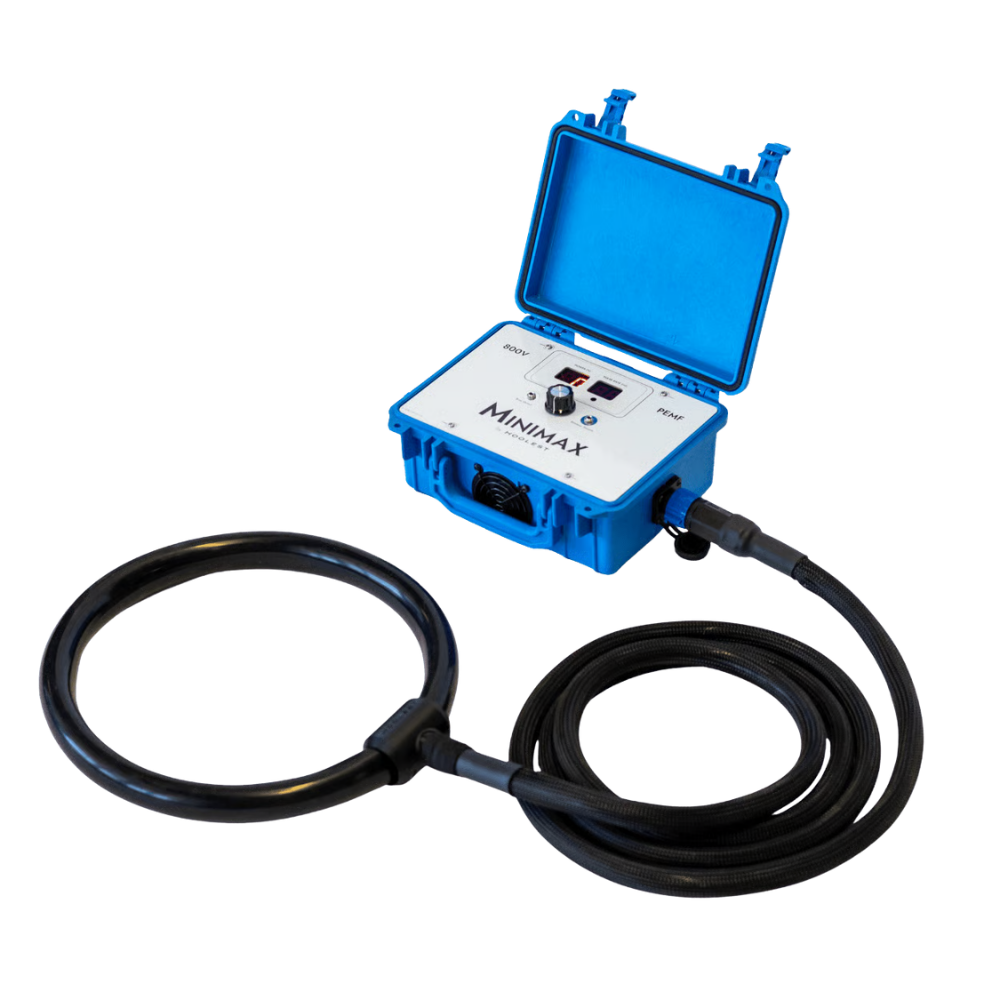
Standard Hoolest MiniMax 12-inch Loop Coil applicator
12″ Loop Coil
Model 12i-8T8 · Hand-applied
Depth Surface–Mid
  • Peak field (edge) ~800 G
  • Peak field (center) ~300 G
  • Induced E-field ~90 V/m
  • Effective depth ≤ 2 in

Best for surface-to-mid-depth applications — joints, peripheral nerves, soft tissue, vagal stimulation over the neck or upper back.

Add-on Hoolest MiniMax Full-Body Mat applicator
Full-Body Mat
19″ × 60″ · 3 internal coils
Depth Broad · Surface
  • Peak field ~230 G
  • Coverage 19″ × 60″
  • Internal coils 3 × 12″
  • Best use Full-body sessions

For whole-system protocols — sleep, recovery, general wellness, and full-body bone density support.

On request Hoolest MiniMax 6-inch High-Flux Coil applicator
6″ High-Flux Coil
Model HF6i-9T12 · Custom order
Depth Deep
  • Peak field (compressed) ~4,000 G
  • Induced E-field ~230 V/m
  • Speed of induction 4,000 T/s
  • Best for Deep tissue

An elliptical, compressible applicator for deep-tissue applications the standard applicators cannot effectively reach. Available by request.

Protocol Primary Applicator Frequency Power Duration Intensity
01Sleep & Circadian Full-Body Mat 1–3 Hz (delta) 20% 30–45 min Low
02Stress & Anxiety 12″ Loop Coil 0.5–1 Hz 30% 15–20 min Low
03Athletic Recovery 12″ Loop + Mat systemic 10–15 Hz Ceiling · ~140 G 20–30 min Mid
04Pain & Inflammation 12″ Loop Coil 7–15 Hz 50–80% 20–30 min Mid
05Bone Healing 12″ Loop or 6″ Coil on deep sites 10–15 Hz Ceiling ~400 G to bone 30 min+ High
06Wound Healing 12″ Loop Coil 7–15 Hz 30–50% 20 min Mid
07Neuropathy & Nerve 12″ Loop Coil 2–5 Hz 40–60% 20–30 min Mid
08General Wellness Full-Body Mat 5–10 Hz 30% 20–30 min daily Low

Click any row to open that protocol's full detail, or scroll down to browse the library. Start conservatively and build tolerance — especially on bone and deep-tissue work. See primary citations →

A note before you begin. These protocols are starting points based on the cited PEMF research, not prescriptions. If you have a diagnosed medical condition, are pregnant, are managing a complex injury, or are uncertain about a specific use case, consult a qualified healthcare professional before starting. Review the Safety & Contraindications section at the end of this document before your first session.
Used in pro sports recovery rooms, veterinary sports medicine, and chiropractic practices alongside clinical platforms that cost 10× more.
Ready to run these protocols
See the MiniMax.

One control unit, three applicators, every protocol on this page. Shipped from Phoenix with a 1-year warranty and US-based support.

See the MiniMax
Track · Science of PEMF

What PEMF actually does — and why intensity matters.

Pulsed electromagnetic field therapy has nearly fifty years of peer-reviewed research behind it, with FDA clearance for non-union fractures dating to 1979. This track covers the physics (what Gauss really means), the biology (what a pulsed field does at the cellular level), and the numbers you need to read any PEMF study honestly.

Low-field clinical PEMF (typically 0.05–150 G at target tissue) is the most extensively studied category. This is the FDA-cleared bone-healing literature (Bassett 1974), the published RCTs for insomnia (Pelka 2001), low-back pain (Harden 2007), and postoperative recovery (Rohde 2010). These devices typically use low-amplitude pulse waveforms delivered over extended sessions or hours per day.

High-intensity peripheral magnetic stimulation (typically 300–4,000+ G at target tissue) operates at a different scale. The published literature supports applications in nerve pain (Khedr 2011, Sato 2002), motor recovery (Ke 2022), athletic recovery and autonomic balance (Keriven 2025), and joint pain (Ryang We 2012). Sessions are typically 5–30 minutes given the higher field strength delivered per pulse.

The MiniMax sits in the high-intensity peripheral category. Its 12″ Loop delivers ~800 G at the coil inner edge; the 6″ High-Flux Coil delivers up to ~4,000 G inside the coil aperture. The protocols in this document are informed by both the broader PEMF mechanism research (which applies across field strengths) and the high-intensity peripheral magnetic stimulation literature that operates closer to the MiniMax's actual range.

Gauss (G) is a unit of magnetic field strength — specifically, the density of magnetic flux passing through a given area. Named after the 19th-century German mathematician and physicist Carl Friedrich Gauss, it's the yardstick scientists, engineers, and clinicians use whenever a magnetic field needs to be described, measured, or compared.

In PEMF therapy, Gauss tells you how strong the pulsed field is at the applicator's surface. Stronger fields penetrate deeper — reaching joints, bones, and tissues that lie below the skin. This is why every MiniMax protocol lists both a Power % (what you set on the knob) and an estimated Gauss (what the tissue actually experiences).

Where the MiniMax sits on the Gauss scale
Earth's magnetic field
~0.5 G
Fridge magnet
~50 G
MiniMax Full-Body Mat
~230 G
MiniMax 12″ Loop Coil
~800 G
MiniMax 6″ High-Flux Coil
~4,000 G
MRI (3-Tesla scanner)
~30,000 G

Gauss is strength.

How powerful each pulse is. Higher Gauss means a deeper, more forceful field at the applicator. On the MiniMax, Gauss scales with Power % at frequencies of 10 Hz or lower.

×

Hertz is rhythm.

How many pulses per second. A 2 Hz setting pulses twice per second; 40 Hz pulses forty times. Frequency shapes the physiological signal — Gauss determines how deeply it reaches.

Interactive Converter

Match intensity to your goal.

Not every protocol needs full power. Gauss determines how deep the field reaches — light-touch neurological work needs very little, while deep-joint and bone healing need a lot. Pick a target below, or drag the slider to see what each applicator delivers.

50%
Power Setting
Target the application
12″ Loop Coil
~400G
Full-Body Mat
~115G
6″ High-Flux Coil
~2,000G
Currently Targeting
Muscle & Joint — mid-range intensity for general pain, muscle recovery, and superficial joints. This is where most daily protocols live.
Note: Values are approximate, measured at the applicator's highest-flux point, and assume operation ≤ 10 Hz. Above 10 Hz, available Power % is automatically reduced — the capacitor pulse driver cannot fully recharge at high frequencies. Protocols in the 25–50 Hz range are inherently lower-intensity per pulse.

A pulsed magnetic field passes cleanly through skin, fat, muscle, and bone — tissues that are essentially transparent to magnetism. What meets it at depth are your cells. And cells are fundamentally electrical.

Each Gauss pulse induces a tiny current in the tissue below the applicator. That current doesn't do one thing — it does many. Here's what the literature has converged on.

01
Cellular charge restoration
Healthy cells hold a resting charge of about −70 mV. Injured or inflamed cells drop toward −40 mV and lose normal function. Each PEMF pulse induces a micro-current that helps re-energize them back toward baseline.
02
Enhanced ATP production
Mitochondria — the energy factories inside every cell — respond to pulsed fields by producing more ATP. More ATP means more fuel for tissue repair, waste clearance, and normal cellular function.
03
Improved microcirculation
PEMF triggers nitric oxide release, relaxing and opening capillaries. Oxygen and nutrient delivery to tissue increases, and metabolic waste clears faster. Many users feel this as a gentle warming under the applicator.
04
Down-regulated inflammation
PEMF reduces pro-inflammatory signals (TNF-α, IL-6, COX-2) without suppressing normal immune function. The result: less stiffness, less swelling, faster recovery.
05
Accelerated tissue repair
Pulsed fields activate osteoblasts (bone), fibroblasts (connective tissue), and chondrocytes (cartilage). This is the mechanism behind PEMF's original FDA clearance for non-union fractures — and the reason it's used so widely in orthopedic and soft-tissue recovery.
06
Autonomic rebalancing
Low-frequency protocols (below 10 Hz) shift the body out of sympathetic "fight-or-flight" dominance and toward parasympathetic "rest-and-digest." Users often see measurable gains in HRV and vagal tone.

Published mechanisms, not medical claims. PEMF has been FDA-cleared for non-union bone fractures since 1979, and the mechanisms above are drawn from peer-reviewed literature. The MiniMax is a General Wellness device — it is not cleared to diagnose, treat, cure, or prevent any specific disease. Consult a qualified healthcare provider before using PEMF for a medical condition.

The vagus nerve is the body's main parasympathetic pathway. It runs from the brainstem down through the neck, chest, abdomen, and into the gut, branching out across nearly every major organ system along the way. Vagal tone is most commonly measured through heart-rate variability (HRV); higher HRV correlates with parasympathetic dominance and is widely used as a recovery and stress-resilience marker.

The auricular branch of the vagus nerve, the small superficial branch in the outer ear, can be reached by surface electrical stimulation devices (such as Hoolest's VeRelief Prime and Hoolest Pro). The deeper branches running through the torso and abdomen sit several inches below the skin, beyond the effective range of surface electrical stimulation. Reaching those deeper branches requires a different physics: high-intensity magnetic energy, which passes through soft tissue without surface attenuation.

This depth distinction is the central rationale for the MiniMax. Its high-output 12″ Loop delivers field strengths in the range described in the high-intensity peripheral magnetic stimulation literature, sufficient to reach deeper vagal pathways that surface stimulation cannot. Keriven et al. 2025 measured significant HRV improvements (LF, HF, LF/HF) in young athletes after peripheral electromagnetic stimulation, providing direct experimental support for using peripheral EMS to influence vagal-autonomic state.

Vagal-pathway language describes anatomy and wellness self-care contexts; the MiniMax is not a treatment for any diagnosed condition.

ATPadenosine triphosphate The energy currency every cell runs on. PEMF is reported to support ATP production via Ca²⁺/calmodulin-mediated pathways — relevant to muscle recovery and cellular bioenergetics.
Cytokinesignaling molecule Small protein released by cells to coordinate immune and inflammatory responses. IL-1β, IL-6, and TNF-α are the cytokines most often modulated by PEMF in the published literature — they drive both post-exercise soreness and disc-related radicular pain.
DOMSdelayed onset muscle soreness The 24–72 hour post-exercise soreness pattern from eccentric or unfamiliar work. Driven by microdamage and the inflammatory cleanup cascade. The window where post-session PEMF aims to dampen the curve.
GaussG — magnetic field strength Unit measuring magnetic field intensity. Earth's field is ~0.5 G. The MiniMax 12″ Loop delivers a peak ~800 G (80 mT) at the coil inner edge, falling off rapidly with distance. The 6″ High-Flux Coil delivers up to ~4,000 G (0.4 T) inside the coil.
HertzHz — pulse frequency How many times per second the magnetic field cycles. Different windows have different effects: 3 Hz (delta, parasympathetic / sleep), 7–8 Hz (Schumann anchor, circadian), 10 Hz (anti-inflammatory / ECM synthesis), 25–40 Hz (acute edema clearance).
HRVheart rate variability Variation in time between consecutive heartbeats. Higher HRV indicates parasympathetic dominance and good recovery; lower HRV signals sympathetic stress or under-recovery. The most useful single proxy for whole-body recovery state in athletes.
MMPmatrix metalloproteinase Enzymes that break down extracellular matrix proteins (collagen, proteoglycans). Up-regulated in disc degeneration, joint inflammation, and chronic injury states. PEMF has been shown to reduce MMP gene expression in disc cells (Miller 2016).
NF-κBnuclear factor kappa-B Master inflammatory transcription factor — when active, it drives expression of inflammatory cytokines and tissue-breakdown enzymes. PEMF suppresses NF-κB activation in disc cells, which is the upstream reason for the downstream cytokine reductions reported in the literature.
NO/cGMPsignaling cascade Nitric oxide (NO) and cyclic GMP — a signaling pathway that drives vascular relaxation and microcirculation. Pilla 2012 demonstrated PEMF accelerates NO release in challenged cells, which is the proposed mechanism behind much of PEMF's recovery and anti-inflammatory effect.
PEMFpulsed electromagnetic field Therapy that delivers low-frequency pulsed magnetic fields through tissue. FDA-cleared for non-union fracture healing since 1979; broadly used off-label for recovery, pain, and tissue repair. Distinct from continuous-wave or high-frequency RF therapies.
RHRresting heart rate Heart rate at rest, typically measured first thing in the morning. Elevated RHR over baseline is a reliable signal of incomplete recovery, illness onset, or accumulated training stress. Tracked alongside HRV for a full recovery picture.
Schumann resonance~7.8 Hz The Earth-ionosphere cavity's electromagnetic resonance frequency, around 7.83 Hz. Coincidentally aligns with human alpha-band EEG. Used in PEMF as a circadian / parasympathetic anchor for sleep and stress protocols.
Vagus nervecranial nerve X The body's main parasympathetic pathway, running from the brainstem through the neck and down into the thorax and abdomen, branching out across major organ systems along the way. Mediates baseline parasympathetic tone. HRV is its most common non-invasive readout.
VGCCvoltage-gated calcium channel Cell-membrane proteins that let Ca²⁺ flow when the membrane voltage shifts. PEMF is hypothesized to modulate VGCC activity, which feeds into Ca²⁺/calmodulin signaling, ATP production, and tissue-repair pathways.
WADAWorld Anti-Doping Agency The international body that maintains the prohibited substances and methods list for Olympic and elite competitive sport. PEMF is currently not on the prohibited list — verify each season since rules change.


Foundational PEMF research

  1. Bassett CAL, Pawluk RJ, Pilla AA. Augmentation of bone repair by inductively coupled electromagnetic fields. Science, 1974. Foundational work underlying the 1979 FDA clearance for non-union fractures.
  2. Pilla AA. Electromagnetic fields instantaneously modulate nitric oxide signaling in challenged biological systems. Biochem Biophys Res Commun, 2012. Mechanism: NO / cyclic GMP cascade.
  3. Funk RHW, Monsees T, Özkucur N. Electromagnetic effects: from cell biology to medicine. Prog Histochem Cytochem, 2009. Cellular-level mechanisms overview.
  4. Markov MS. Pulsed electromagnetic field therapy: history, state of the art and future. The Environmentalist, 2007. Modern PEMF literature overview.
  5. Waldorff EI, Zhang N, Ryaby JT. Pulsed electromagnetic field applications: a corporate perspective. J Orthop Translat, 2017. Modern PEMF device landscape and clinical outcomes.

Lower-field clinical PEMF studies

  1. Pelka RB, Jaenicke C, Gruenwald J. Impulse magnetic-field therapy for insomnia: a double-blind, placebo-controlled study. Adv Ther, 2001. n=101 RCT, PEMF and sleep.
  2. Rohde C, et al. Effects of pulsed electromagnetic fields on interleukin-1β and postoperative pain. Plast Reconstr Surg, 2010. PEMF and inflammatory cascade in a postoperative human RCT.
  3. Strauch B, Herman C, Dabb R, et al. Evidence-based use of pulsed electromagnetic field therapy in clinical plastic surgery. Aesthet Surg J, 2009. Wound healing and edema review.
  4. Harden RN, Remble TA, Houle TT, et al. Sham-treatment-controlled study of the safety and efficacy of an electromagnetic field device for the treatment of chronic low back pain: a pilot study. Pain Pract, 2007. RCT, n=40, 15 mT.
  5. Miller SL, Coughlin DG, Waldorff EI, Ryaby JT, Lotz JC. PEMF treatment reduces expression of genes associated with disc degeneration in human intervertebral disc cells. The Spine Journal, 2016. Cellular: IL-17A −33%, MMP2 −24%, NF-κB −11%.

High-intensity peripheral magnetic stimulation

  1. Keriven H, et al. Influence of combined transcranial and peripheral electromagnetic stimulation on the autonomous nerve system on delayed onset muscle soreness in young athletes: a randomized clinical trial. J Transl Med, 2025. n=48, peripheral EMS improves HRV (LF, HF, LF/HF) and accelerates DOMS recovery.
  2. Khedr EM, et al. Therapeutic effects of peripheral magnetic stimulation on traumatic brachial plexopathy: clinical and neurophysiological study. Neurophysiol Clin, 2011. n=34, peripheral rMS, 10 sessions, significant pain ↓ and muscle strength ↑.
  3. Ryang We S, Koog YH, Jeong KI, Wi H. Effects of pulsed electromagnetic field on knee osteoarthritis: a systematic review. Rheumatology (Oxford), 2012. 14 RCTs, n=930. High-quality trials showed PEMF significantly more effective than placebo at 4 and 8 weeks for knee OA.
  4. Sato T, Nagai H. Sacral magnetic stimulation for pain relief from pudendal neuralgia and sciatica. Dis Colon Rectum, 2002. Pilot, immediate pain elimination from sacral nerve-root magnetic stimulation, relief 30 min – 56 days.
  5. Ke J, et al. Effect of High-Frequency Repetitive Peripheral Magnetic Stimulation on Motor Performance in Intracerebral Haemorrhage. J Stroke Cerebrovasc Dis, 2022. RCT, HF-rPMS at axilla and popliteal fossa: significant motor function and muscle strength improvements.
Track · Outcomes

Who uses PEMF — and why.

PEMF is not a fringe modality. It's FDA-cleared for orthopedic use, investigated by NASA, adopted across professional sports and veterinary medicine, and installed in clinical practice worldwide. Below: documented adoption, and what real MiniMax users are experiencing.

1979
FDA-cleared for non-union fractures
The FDA cleared PEMF for non-union bone fractures in 1979 — one of the earliest clearances for any non-invasive electromagnetic therapy. Clearance has since expanded to post-operative pain, edema, and cervical fusion.
NASA
Bone & neural tissue research
A multi-year NASA program (led by Dr. Thomas Goodwin) studied PEMF's effect on human neural and bone tissue in simulated microgravity — as a countermeasure for astronaut bone-density loss on long missions.
Pro Sports
NFL · NBA · MLB · NHL training rooms
PEMF systems are standard equipment in pro-sports recovery rooms. Multiple NFL, NBA, MLB, and NHL teams use clinical PEMF platforms in their daily recovery protocols.
2,000+
Peer-reviewed PEMF publications
A PubMed search for "pulsed electromagnetic field" returns thousands of peer-reviewed papers spanning orthopedics, neurology, wound care, pain, and cellular biology. Deep and growing.
Veterinary
Equine & canine rehabilitation
PEMF is standard care in equine sports medicine and canine rehabilitation — soft-tissue injury, joint inflammation, and post-surgical recovery. A population largely free of placebo effect.
Global
Clinics, practitioners, private owners
Clinical-grade PEMF systems ($10K–$35K platforms) sit in chiropractic practices, integrative medicine clinics, and home-care setups worldwide. The MiniMax brings that output class into a desktop-sized device.
Clinician
Clinical Use
[Clinician quote — a chiropractor, PT, or integrative-medicine doctor using MiniMax in-practice, speaking to patient outcomes or why they chose it over larger clinical systems.]
— Name, Credential
Practice · Location
Athlete
Athletic Recovery
[Athlete quote — a competitive athlete, coach, or trainer speaking to recovery time, soft-tissue work, or pre/post-session use.]
— Name
Sport · Level

Note on claims: Individual results vary. Testimonials reflect one person's experience and are not a promise of outcomes. PEMF is a wellness modality — not a substitute for medical care. Daily-use and recovery stories coming soon.

Straight Answers

Questions we hear most often.

If you're weighing PEMF seriously — or comparing the MiniMax against bigger-ticket clinical systems — these are the honest answers.

Daily use is the norm. Most published protocols run 15 minutes to 2 hours per session, once or twice a day. Sleep, stress, and wellness work fits into 20–40 minute blocks. Pain, bone, and deep-joint protocols usually run 30–60 minutes.

There's no documented "too much" inside published ranges. The field is non-ionizing and the hardware is built for long, unattended sessions.

Yes — and many users do. A common daily stack: a morning General Wellness or Stress & Anxiety session with the 12″ Loop or Mat, followed by a targeted Pain or Recovery session on the 6″ Coil later in the day.

The one rule: run protocols sequentially, not simultaneously. The MiniMax drives one applicator at a time, and the biology of each protocol is built around a specific frequency — blending them dilutes both.

Pulse Centers / CentroPulse: clinic-only systems at tens of thousands of Gauss. Enormous field strength — but they live in a treatment room and cost $30K+. The MiniMax delivers peak Gauss in the same conversation (up to ~4,000 G at the 6″ Coil) in a portable, single-operator form.

iMRS / Omnium1: low-intensity, full-body mat systems (0.05–50 μT, or ~0.5–500 milligauss). Different use case — whole-body wellness at low intensity. The MiniMax runs orders of magnitude stronger and targeted.

Hugo Flexpulse / portable coils: comparable peak Gauss at the applicator surface, but single-coil only. The MiniMax ships with three applicators covering surface → muscle → deep-bone in one system.

1-year manufacturer warranty on electronics, applicators, and cabling against defects in materials or workmanship. Extended coverage available at checkout.

Support is based in Phoenix, AZ — not outsourced. If something goes wrong, you'll talk to someone who knows the device.

Yes. The control unit and 12″ Loop/Mat pack into a single carry case — practitioners travel with it between clinic days, use it for home visits, or rotate it between rooms. Mains power only; a standard outlet is all you need.

The 6″ High-Flux Coil is an add-on accessory and ships separately in its own case.

PEMF is commonly used as an adjunct to manual therapy, rehab, and athletic training — not a replacement. Clinicians often run a 20-minute MiniMax session before manual work (to prime tissue) or after (to accelerate recovery).

If you have implanted electronics, active cancer, are pregnant, or have other contraindications listed in the Safety section below, check with your clinician before adding PEMF to your routine.

Before You Begin

Safety & contraindications

Every protocol on this page assumes the conditions below are met. The list here is a summary; the full contraindications and usage guidelines live in the MiniMax Instructions & Safety Guide.

Do not use
Absolute contraindications
  • Implanted pacemaker, defibrillator, or active electronic device
  • Cochlear implant
  • Implanted insulin or drug-delivery pump
  • Implanted neurostimulator (spinal cord, vagus, deep brain)
  • Pregnancy
Consult a physician
Relative contraindications
  • Active cancer or history of cancer
  • Uncontrolled seizure disorder or epilepsy
  • Active bleeding or bleeding disorder
  • Recent surgery (within 30 days) or surgical hardware
  • Organ transplant recipient
  • Recent myocardial infarction (within 6 months)
  • Children under 18 unless supervised
For complete usage & safety documentation
Request the Full Safety Guide
You made it to the end
Start running protocol 01 tonight.

The MiniMax is a single portable system — control unit plus three applicators — built to run every protocol on this page from home, clinic, or on the road.

See the MiniMax

Added to cart